ShaPoLi vs. EPL: Choosing the Right Decarbonization Strategy for Your Vessel

The maritime industry is navigating an era of unprecedented regulatory pressure. With the International Maritime Organization (IMO) enforcing strict decarbonization targets, shipowners and operators are compelled to adapt their existing fleets to meet stringent environmental standards. At the forefront of this regulatory wave is the Energy Efficiency Existing Ship Index (EEXI), a framework designed to ensure older vessels meet the same baseline efficiency standards as newly built ships.

For the vast majority of the global merchant fleet, achieving EEXI compliance without substantial and costly vessel modifications requires a direct reduction in the ship’s maximum continuous rating (MCR). By artificially capping a vessel's maximum power output, operators can instantly lower their calculated carbon emissions, satisfying the EEXI formula. To achieve this power limitation, the industry has standardized around two primary technological solutions: Engine Power Limitation (EPL) and Shaft Power Limitation (ShaPoLi).
While both systems ultimately serve the exact same regulatory purpose—restricting maximum power to reduce emissions—they achieve this goal through fundamentally different mechanical and electronic pathways. Choosing between ShaPoLi and EPL is not merely a box-ticking exercise for compliance; it is a strategic decision that directly impacts a vessel's operational flexibility, upfront capital expenditure, long-term maintenance, and safety protocols. This comprehensive guide explores the technical mechanics, operational realities, and strategic implications of both systems to help fleet managers choose the right decarbonization strategy.
Understanding the Regulatory Driver: The EEXI Challenge
Before diving into the technical differences between EPL and ShaPoLi, it is crucial to understand the regulatory framework that makes these systems necessary. The EEXI is a technical measure introduced by the IMO to reduce the greenhouse gas emissions of ships already in service. It is a one-time certification that applies to almost all ocean-going cargo and passenger vessels above 400 gross tonnage.
The EEXI calculation is based on a vessel's design parameters, including its engine power, carrying capacity, and theoretical speed. If a vessel's calculated EEXI value exceeds the required baseline set by the IMO, the shipowner must implement technical modifications to bring the vessel into compliance. Because retrofitting older vessels with energy-saving devices (like hull air lubrication or rotor sails) is often prohibitively expensive and requires significant dry-dock time, power limitation has emerged as the most universally adopted, cost-effective solution.
By installing an EPL or ShaPoLi system, a shipowner effectively derates the main engine's maximum power output on paper and in practice. This lower power figure is then used in the EEXI calculation, bringing the vessel's theoretical emissions profile down to the required regulatory threshold. However, safety regulations dictate that a ship must always have access to its full power reserve in case of emergencies, such as navigating through severe weather or avoiding a collision. Therefore, both EPL and ShaPoLi must include a secure, auditable mechanism to override the limitation. The way this override is handled is one of the primary differences between the two systems.
What is Engine Power Limitation (EPL)?
Engine Power Limitation (EPL) is arguably the most straightforward and traditional approach to restricting a vessel's power. It is primarily a mechanical or electro-mechanical intervention that directly targets the engine's fuel delivery system or governing mechanism.
How EPL Works
At its core, an EPL system physically restricts the amount of fuel that can be injected into the main engine cylinders. For mechanically controlled engines, this usually involves installing a physical stopper—a locked bolt or a physical block—on the engine's fuel rack or governor. This stopper prevents the fuel index from advancing beyond the newly calculated maximum EEXI compliant limit.
For newer, electronically controlled engines, the EPL acts as a software limitation within the Engine Control System (ECS). A password-protected parameter is set within the engine's software, creating an electronic ceiling that the governor cannot exceed under normal operating conditions.
Pros of EPL
The primary advantage of EPL is its profound simplicity. Because the mechanical version relies on basic physical components, the installation process is typically rapid, inexpensive, and requires minimal specialized equipment. In many cases, mechanical EPL setups can be installed by the vessel's crew under the guidance of the engine manufacturer, avoiding the need for expensive technician visits or extended downtime.
Additionally, mechanical EPL systems require virtually no ongoing maintenance. Once the stopper is in place and verified by a classification society, it remains a passive component of the engine room. For older vessels nearing the end of their lifecycle, this low upfront Capital Expenditure (CapEx) makes EPL an highly attractive, budget-friendly route to EEXI compliance.
Cons of EPL
The simplicity of EPL is also its greatest drawback, particularly regarding operational flexibility and safety. When a vessel encounters an emergency situation that demands maximum engine power—such as fighting a severe storm or executing an evasive maneuver—the crew must override the EPL.
In a mechanical EPL system, this override procedure is entirely manual. The Chief Engineer or duty officer must physically go to the engine, break a wire seal, and manually remove the mechanical stopper from the fuel rack. In a high-stress, time-critical emergency, this physical intervention wastes precious minutes.
Furthermore, once the seal is broken, it triggers a stringent and immediate regulatory reporting protocol. However, contrary to common misconception, an override does not automatically necessitate a costly operational delay to wait for a class surveyor to physically attend the vessel. Under current IMO guidelines (such as MEPC.335(76)), the vessel's Master is empowered to manually reset the EPL and reapply the mechanical seal as soon as the emergency or navigational hazard has safely passed.

The true burden of an EPL override lies in the subsequent administrative and evidentiary requirements. The crew must meticulously document the event, logging the exact time, duration, and justification for the override in both the bridge and engine-room logbooks, as well as the Onboard Management Manual (OMM). The shipowner is then required to promptly submit this comprehensive documentary evidence—which typically includes photographic proof of the newly applied seal alongside the corresponding engine power logs—to their flag Administration or Recognized Organization (RO). The RO will perform a review of these materials to remotely verify that the system has been properly reactivated. While the classification society always retains the right to mandate a physical inspection if the provided evidence is deemed insufficient or unclear, the standard procedure is designed to be resolved without an in-person visit, placing a heavy reliance on the crew's absolute diligence in record-keeping during high-stress situations.
What is Shaft Power Limitation (ShaPoLi)?
Shaft Power Limitation (ShaPoLi) represents a more modern, sophisticated, and data-driven approach to power restriction. Rather than physically limiting the engine's fuel intake, ShaPoLi focuses on the actual power being delivered to the propeller.
How ShaPoLi Works
A ShaPoLi system relies on highly accurate torsion meters installed directly onto the vessel's propeller shaft. These sensors continuously measure the shaft's torque and rotational speed (RPM), allowing the system to calculate the exact power output in real-time.
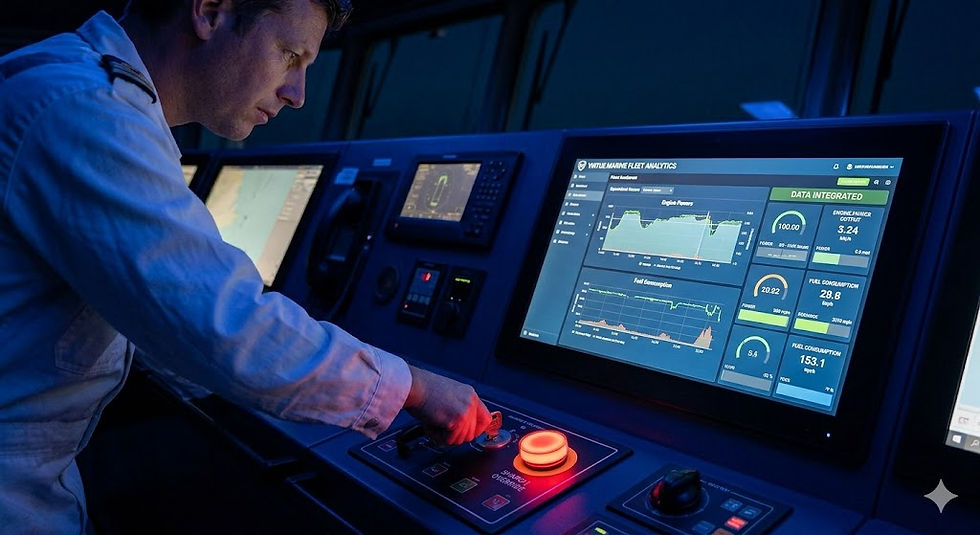
This live data is fed into a centralized control panel, typically located on the navigation bridge with a repeater in the engine control room. The system is programmed with the vessel's maximum EEXI compliant power limit. As the vessel accelerates and approaches this limit, the ShaPoLi system triggers visual and audible alarms to alert the crew. If the crew fails to reduce power and the limit is exceeded, the ShaPoLi system interfaces with the engine's governor to automatically scale back the RPM, preventing the vessel from breaching its compliance threshold.
Pros of ShaPoLi
The most significant advantage of ShaPoLi is its operational safety and ease of use during emergencies. Because the system is electronic and integrated into the bridge controls, the Master can override the power limitation instantly with the push of a button or the turn of a key directly from the bridge. There is no need to send personnel down to the engine room to physically break seals. This instantaneous access to unreserved engine power can be life-saving in sudden, critical situations.

Furthermore, ShaPoLi systems are entirely digital and inherently data-rich. When an override occurs, the system automatically logs the exact time, duration, and peak power used. This automated, tamper-proof data logging significantly simplifies the mandatory reporting process to the flag state and classification societies, reducing the administrative burden on the crew. The continuous stream of highly accurate shaft power data can also be integrated into broader fleet performance monitoring software, helping operators optimize voyage routing, monitor hull fouling, and improve overall fuel efficiency.
Cons of ShaPoLi
The primary barrier to ShaPoLi adoption is the initial cost and installation complexity. Purchasing the sensitive torsion meters, laying the necessary cabling from the shaft alley to the bridge, and integrating the software with the vessel's existing automation systems requires significant investment.
Installation is not a do-it-yourself task for the crew; it requires specialized technicians and often necessitates the vessel being out of service for a short period. Additionally, unlike a simple mechanical stopper, ShaPoLi sensors require periodic calibration and maintenance to ensure their readings remain accurate and compliant with class requirements over time.
ShaPoLi vs. EPL: A Direct Strategic Comparison
When evaluating which system is best for a specific vessel, technical directors and fleet managers must weigh several competing factors to align the choice with their broader operational strategy.
Installation and Downtime
EPL is the clear winner regarding installation speed and minimal disruption. Mechanical EPLs can often be fitted during standard port calls without interrupting the vessel's commercial schedule. The required components are inexpensive and universally available.
ShaPoLi, conversely, requires careful planning. The installation of shaft sensors requires precise alignment, and running data cables through multiple bulkheads to the bridge can be a labor-intensive process. While it can sometimes be achieved alongside cargo operations, it frequently requires a dedicated maintenance window or dry-docking to execute smoothly.
Cost Implications (CapEx vs. OpEx)
EPL presents a highly attractive CapEx profile. The physical hardware is inexpensive, and installation costs are generally negligible. However, the Operational Expenditure (OpEx) of an EPL system largely manifests as an administrative burden. While routine physical Class attendance for resealing is not the standard, every override demands meticulous manual documentation, photographic evidence gathering, and precise logbook entries by the crew. Any error, delay, or omission in this manual reporting process risks rejection by the Recognized Organization, which could then mandate a costly, unscheduled physical surveyor visit to verify the system.
Conversely, ShaPoLi requires a significantly higher CapEx investment due to the sophisticated torsion meters, extensive cabling, and bridge integration. However, its OpEx related to overrides is notably streamlined. The system's automated, tamper-proof electronic data logging virtually eliminates the administrative friction and the risk of human error in post-override reporting, ensuring a smooth, frictionless remote verification process. It is worth noting, however, that ShaPoLi does introduce its own distinct OpEx requirements, such as the periodic calibration and specialized maintenance of the shaft sensors to maintain class approval.
Safety and the "Override" Factor
The ability to access full power instantly is a critical safety parameter. In this arena, ShaPoLi offers a distinct advantage. The bridge-controlled electronic override ensures that the Master has immediate control over the vessel's full capabilities without the dangerous delay associated with sending an engineer to mechanically unblock a fuel rack. For vessels navigating treacherous waters, high-traffic straits, or areas prone to sudden squalls, this immediate response time is invaluable.
Data Integration and Future-Proofing
The maritime industry is rapidly digitizing. Operators are increasingly relying on high-frequency data to optimize their operations and comply with subsequent environmental regulations, such as the Carbon Intensity Indicator (CII).
ShaPoLi systems natively generate highly accurate, continuous data streams regarding the vessel's actual power output and performance. This data is essential for accurate CII reporting and voyage optimization. EPL systems, particularly mechanical ones, provide zero operational data. If an operator chooses EPL, they may still need to install separate shaft power meters in the future to accurately track and improve their vessel's operational efficiency. In this light, ShaPoLi can be viewed as a more future-proof investment that aligns with the industry's trajectory toward data-driven fleet management.
Which System is Right for Your Fleet?
There is no universal "correct" answer when choosing between ShaPoLi and EPL. The optimal choice depends entirely on the specific profile of the vessel and the strategic goals of the shipping company.
When to Choose Engine Power Limitation (EPL)
EPL is highly recommended for older vessels that are approaching the end of their commercial lifespan. If a ship only has a few years of service remaining before recycling, investing heavily in a sophisticated ShaPoLi system makes little financial sense. EPL provides the necessary EEXI compliance at the lowest possible cost, allowing the vessel to finish its service life legally and profitably.

EPL is also highly suitable for vessels with simple, mechanically controlled engines that operate primarily in benign weather regions or on predictable, short-sea routes where the likelihood of encountering emergencies requiring an override is statistically very low.
When to Choose Shaft Power Limitation (ShaPoLi)
ShaPoLi is the strategically superior choice for modern vessels with a long remaining lifespan. The initial investment is easily amortized over the decades the ship will remain in service.
It is also the essential choice for operators committed to digital fleet management and performance optimization. The data generated by a ShaPoLi system is vital for understanding a vessel's true fuel consumption, optimizing hull cleaning schedules, and improving CII ratings. Furthermore, for vessels operating in volatile maritime environments—such as the North Atlantic or the rough waters of the Southern Ocean—the instant bridge-controlled override offered by ShaPoLi provides a critical, non-negotiable safety margin.
Conclusion
The implementation of the EEXI regulation has forced a necessary evolution in how maritime power is managed and deployed. Both Engine Power Limitation and Shaft Power Limitation provide robust, class-approved pathways to compliance. EPL offers a pragmatic, low-cost, and mechanically simple solution ideal for older tonnage and budget-conscious operations. ShaPoLi, while requiring a higher initial investment, delivers superior safety, immediate operational flexibility, and a wealth of performance data that aligns seamlessly with the modern, digitized future of commercial shipping.
Ultimately, the decision between ShaPoLi and EPL must be made on a vessel-by-vessel basis. Fleet managers must carefully analyze the remaining lifespan of their assets, the specific operational environments of their trade routes, and their company's long-term data strategy. By understanding the distinct mechanical realities and operational consequences of each system, maritime leaders can ensure their vessels are not only compliant with today's environmental regulations but are structurally optimized for the challenges of tomorrow.